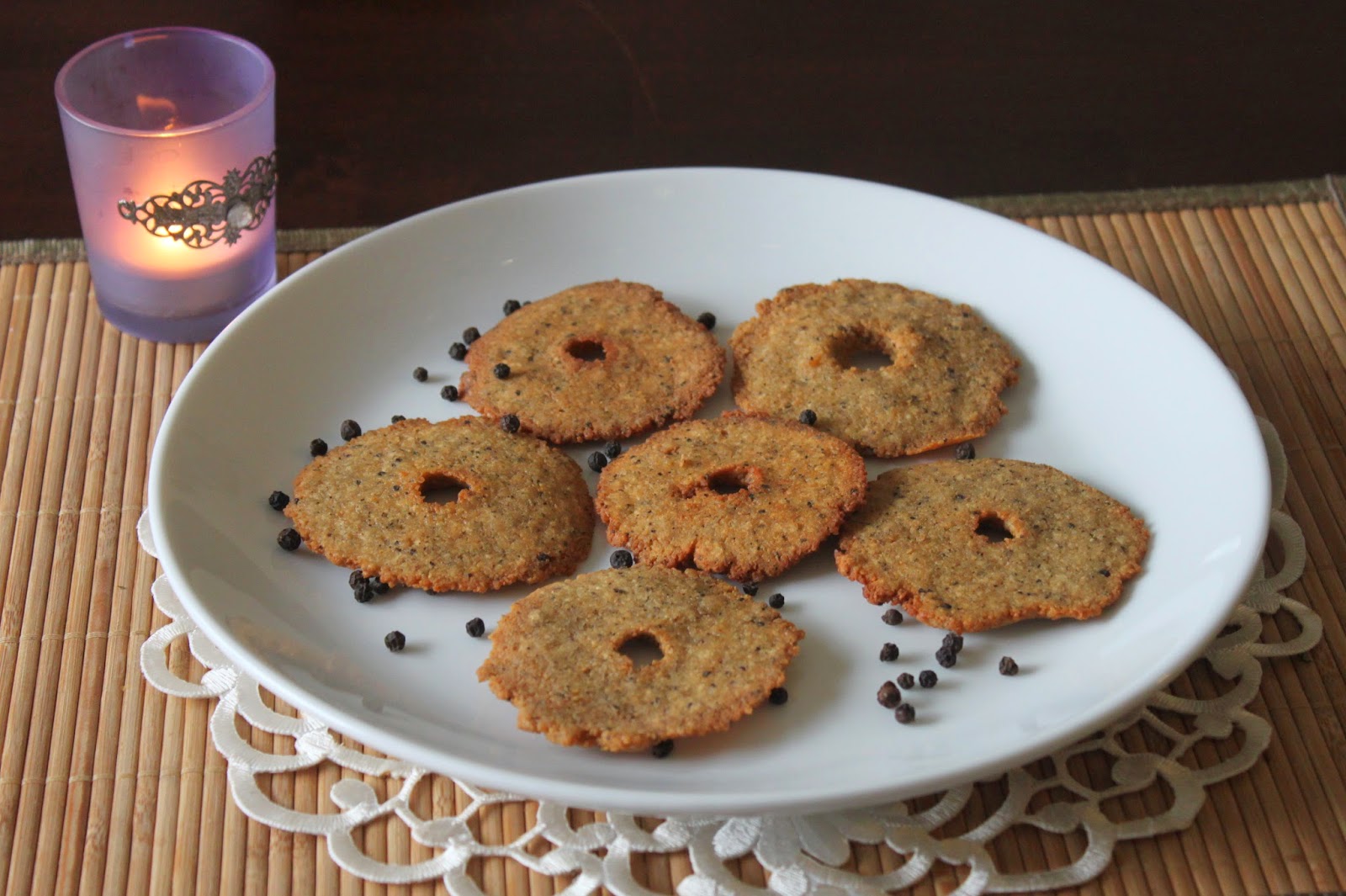
Continuing with the Festive theme, the prescribed savory item that signifies celebrations and festivals is the Ulundhu Vadai. Vadais are crispy, deep fried, crunchiliciousness made of Blackgram Dhal, also known as Urad Dhal. These days, it’s much easier and time saving to buy the de-husked version of the pulses than go through the minor hassle of peeling and separating the husk after soaking the pulses in water. But the farther one starts from first principles, the better the output will be!
This kind of vadai is extremely easy to prepare, and is both mine and Anand’s favorites. The only catch is in forming the vadai and dropping it safely into the oil.
Ingredients
- 1 cup of de-husked black gram dhal (urad dhal)
- 2-3 dried red chillies
- ½ teaspoon of Hing
- Salt to taste
- A few curry leaves
- 1 teaspoon of ghee (optional)
- Vegetable oil to fry - 2-3 cups
Preparation
- Soak the urad dhal in water, for 1 hour
- Drain the water and grind the dhal to a relatively smooth paste with the red chillies, hing, salt, and curry leaves, adding as little water as possible. My mother keeps stressing on adding as little water as possible.
- Both mother and mother-in-law recommend mixing the resultant batter with a teaspoon of ghee. Ghee makes everything taste better!
- Heat oil in a heavy-bottomed frying pan. Test if the oil is hot enough by dropping a pea sized amount of batter. If the batter sizzles and begins to fry immediately, the oil is hot enough.
Forming the Vadai
Urad dhal batter is generally sticky and mushy. It’s not greasy, but it likes to adhere to your hands, making it hard to form the vadai with your hands. So keep a bowl of water nearby to wet your fingers periodically - before and after touching the batter. Secondly, this kind of vadai requires a dainty hole in the middle (like a smaller donut) to ensure even cooking of the batter. Else the outside of the batter crisps up faster, leaving the insides uncooked and mushy. Not pleasant. So, traditionally, a wet banana leaf was used by women to dump a small ball of batter onto it, after which the batter was flattened out (with wet fingers), and a hole was made in the center. Then, after wetting one’s fingers again, the flattened batter was carefully removed from the leaf (by usually inverting the leaf) and gently transferred to the hot oil. Care must be taken to retain the hole, so that the vadai cooks evenly. If the batter was ground with too much water, it makes it much harder to gather slippery batter from the leaf.
These days, in lieu of banana leaves, we use pliant plastic sheets - one way to recycle/reuse the tonnes of plastic wrapping and covers we amass.
Form vadais on the plastic sheet/banana leaf and gently transfer them into the hot oil. Do not splash the batter into the oil, for the little bit of water in it can decide to dangerously splutter. Once the oil is hot, reduce the heat to medium/medium-high, else you risk burning the vadais outside. Turn the vadais gently until both sides cook/fry to a pleasant golden color and transfer them onto paper napkins to drain excess oil.

It is an art to form the vadais. One needs some relentless practice to from even shaped, perfectly formed vadais, so give yourself a pat on the back if you have come close enough to retain the elusive hole in the vadai! I have also come to confirm my mother’s theory that left over batter that sits in the fridge makes exceedingly crisp and wonderful vadais the next day! Of course, it is also accused of drinking a bit much oil in its post-refrigerated state, but the taste and crispiness makes one forget such trivialities :)
Variations:
Hotels add a teaspoon of baking soda to the batter to plump up the vadais. But home-made, conventional ones don’t have this ingredient.
Some people add a few spoons of raw rice to the soaking dhal, because ground rice makes the vadais even crispier. But again, the traditional ones skip the rice.
Finally, one can get creative and add finely chopped vegetables such as onions, carrots, spinach, ginger, etc. to the batter to give the vadais more crunch, texture and flavor.